Shortly after Prince’s untimely death and after the internment of his ashes in Chanhassen, Minnesota, I visited his home and came away with a life-changing experience.
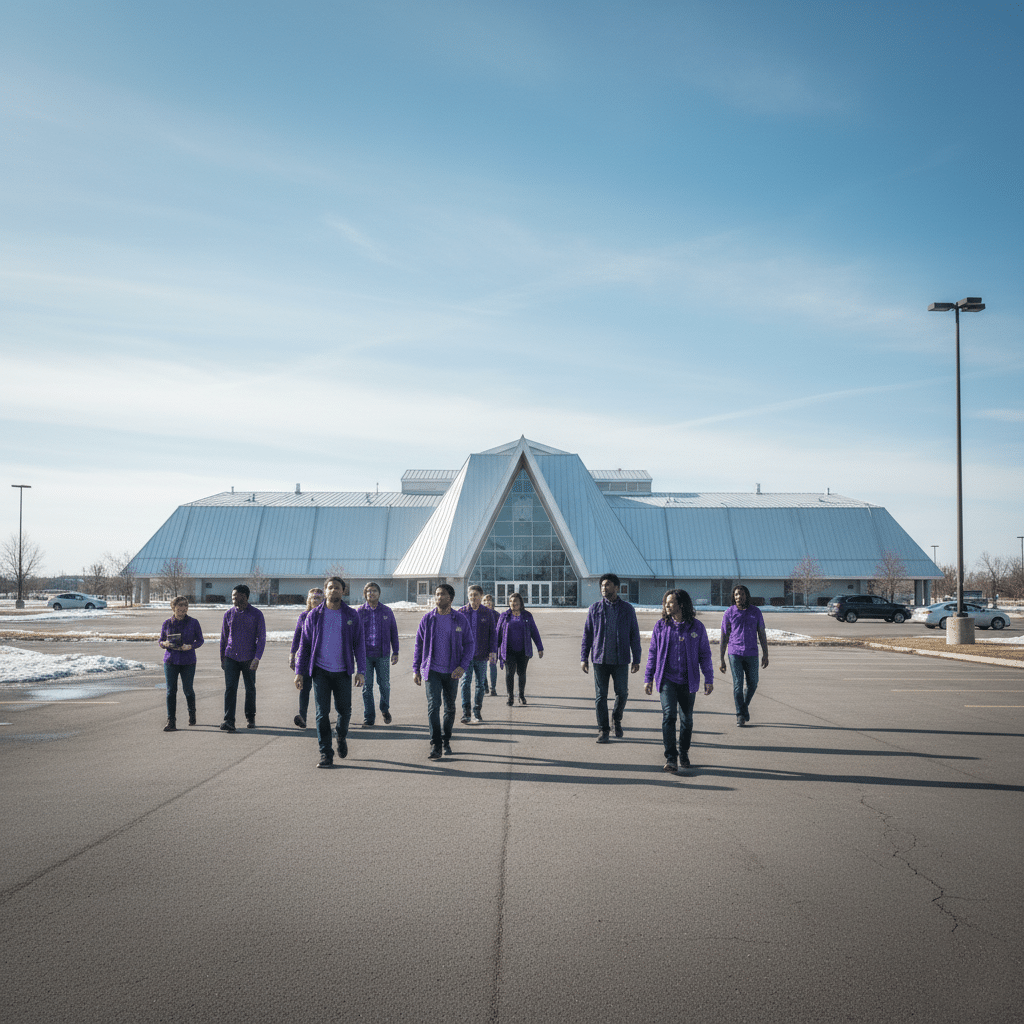
On a bright Friday morning in Chanhassen, Minnesota, the silver-and-white structure of Paisley Park shimmered against the sky. Its angular, futuristic design stood out against the immaculately kept grounds, like a beacon for those who had come to honor the life and legacy of Prince. From the moment I arrived, I knew this wasn’t just a tour – it was a pilgrimage.
Before stepping inside, our phones were collected and secured. There would be no photos, no distractions, only the experience itself. The group was small, a dozen people at most, and many wore something purple – a quiet nod to the man who made the color iconic.
The tour began in the lobby, an unassuming space more reminiscent of a neighborhood diner than the entrance to a legend’s home. A small kitchen, simple tables and chairs, and a TV perched on a stand made it easy to picture Prince here, relaxing with friends, watching basketball, or sharing a meal with his band between recording sessions. For a moment, it felt like stepping into his everyday life, stripped of spectacle.
Then the mood shifted. Overhead, four glass pyramids cast a soft glow onto an urn perched on a high portico. Inside were Prince’s ashes. At the same time, the sound of doves filled the air – gentle, haunting coos that drew our eyes to a large white cage on the second floor. The symbolism was undeniable. His remains glowed above us, while the living doves carried his spirit forward.
From there, we moved deeper into his world. Behind glass stood the Hohner Madcat guitar – scarred, worn, unmistakable. Mistaken by many for a Fender Telecaster, it had been with him through every performance. Its patina, carved by decades of use, told a story of relentless touring and artistry.
Room after room unfolded like chapters in a book. Stage costumes sparkled under the lights, instantly recognizable from concerts and videos. Instruments and memorabilia filled every corner. Awards lined entire walls, a golden corridor of recognition that led toward the soundstage.
The soundstage itself was breathtaking: a cavernous room with seventy-foot ceilings, draped in black curtains. The space had been the backdrop for countless videos, not just Prince’s but also those of Morris Day and The Time and other artists who found a creative home here. Some sets remained, including one with transparent plexiglass instruments – clear drums, amplifiers, guitars, and even a Hammond B3. They looked ethereal, like the ghostly outline of a band frozen mid-song.
Beyond the stage, Prince’s retired tour bus sat quietly in the lot, a relic of his years on the road. Inside the mirrored rehearsal room, I could almost hear the echoes of dancers rehearsing late into the night. A purple keyboard and road gear rested in one corner, reminders of a work ethic that never stopped.
But the heart of the experience was the recording studio. Walking into the control room, I felt the weight of history. The guide explained that Prince often recorded vocals while seated in the booth, singing into pristine microphones on long boom stands. To one side, on an unassuming cart, sat the very drum machine used to create When Doves Cry. Around us were isolated booths for bass, guitar, drums, and vocals. Every detail was designed for precision, and every corner seemed to hum with echoes of the past. To imagine the countless artists who had chosen to record here, just outside Minneapolis, was staggering.
The tour concluded in a private club tucked inside the complex. The space was intimate – a small stage, DJ booth, bar, and cocktail seating. It was easy to picture the late nights that unfolded here: impromptu jam sessions, surprise performances, and gatherings of locals who knew to show up. The room may have been quiet now, but the energy lingered.
Leaving Paisley Park, I felt both awe and humility. This was more than a museum. It was a window into Prince’s world – a space where creativity, community, and innovation thrived. Each room revealed a different facet of his life, from the ordinary moments of rest to the extraordinary artistry that changed music forever.
For musicians, it is a study in genius and dedication. For Prince fans, it is something even more profound: a journey into the heart of his legacy, equal parts intimate and monumental. A visit to Paisley Park isn’t just recommended – it’s essential.
I am happily retired from civil service and now spend my time taking long walks, building analog kit amplifiers, obsessing about vacuum tube electronics, and collecting more guitars. I love writing about music and my community!
Suggest a Story: FCL is built on recommendations from the community; it’s how we uncover hidden gems, so when you or someone you know deserves recognition please let us know here.
I am happily retired from civil service and now spend my time taking long walks, building analog kit amplifiers, obsessing about vacuum tube electronics, and collecting more guitars. I love writing about music and my community!