

Essence: the intrinsic nature or indispensable quality of something, especially something abstract, that determines its character.
Where did you grow up, and when did you discover the Jacksonville Beach area, in particular, Atlantic Beach?
I grew up in the military—I was an Army brat. My father served 37 years in the U.S. Army, and his career took our family around the world. I was born in Tampa, and not long after, my father was assigned to Germany. Over the years, the Army moved us to many places, including Satellite Beach, Florida, where I spent a couple of years in elementary school before later returning to finish my junior and senior years of high school.
After graduation, I joined the military myself and, in time, attended the University of Florida. Once I graduated from UF, I moved to California and eventually settled in San Diego. My wife and I later left San Diego for the Mandarin area of Jacksonville, where we lived for a few years before settling into our current home in Atlantic Beach.
What sparked your initial interest in mezcal, and why did you decide to create your own brand?
In May 2021, after 31 years of military service, I retired. At the time, I didn’t fully grasp how much timing, opportunity, inspiration, and relevance would shape my next chapter. These forces had guided me through the most intense training in the U.S. military, through war, marriage, and raising a young son—and they would prove just as influential in my journey with Mezcal.
It began with a focus on improving my gut health. Looking for a healthier lifestyle while still enjoying a quality drink, I first explored Tequila. Then a friend—deeply passionate about Mezcal—introduced me to it, and his enthusiasm was contagious. I began sampling different brands, studying the distillation process, and learning about the many types of agave. In bar after bar, I noticed Mezcal was largely unknown—a quiet professional standing in the shadow of its louder cousin, Tequila. I understood that quiet professionalism.
Through soul-searching and trips to Oaxaca, I discovered the deep craftsmanship and devotion behind Mezcal’s production. What captivated me most was the unwavering commitment of Mezcaleros to quality. In a world where convenience often replaces craftsmanship, Mezcal has preserved its artesanal methods for generations. The small-batch distillation, the adherence to tradition, and the prioritization of quality over quantity resonated deeply with me. In an era of shortcuts, Mezcal’s six-generation standard—where “standards are the standards—always”—felt like home.
While I’ve learned to thrive in the unknown, no one can operate there forever. When Mezcal found me, I realized those same guiding forces from my military life would also shape O’Kahan Agave.
One part of my “why” became clear during a recent trip to Mitla. My Maestro Mezcalero invited me to his niece’s Catholic confirmation, which turned into an all-day, all-night fiesta at the family’s palenque. As I stood there, taking it all in, I realized that Mezcal is unconventional—just like my life, especially my military career. This past year of building a brand and a label has been an unconventional journey. While Tequila follows the conventional path, Mezcal defies it—exactly the way I prefer it.
So, you decided to go down the road less traveled and become a Mezcalero apprentice?
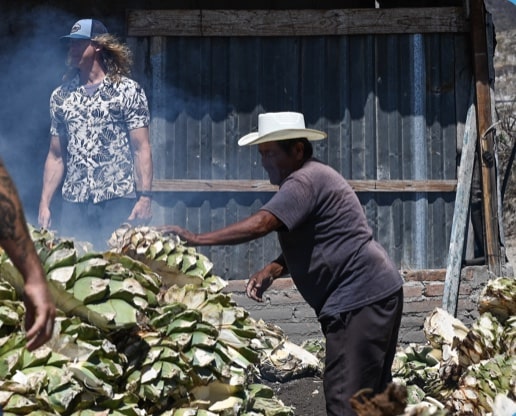
In March 2024, during a visit to the Palenque (Mezcal Distillery) of my future Maestro Mezcalero (Master Mezcal Distiller) in Mitla, Oaxaca, Mexico, I was told that if I truly wanted to become a part of Mezcal and its culture, I needed to stay with his family for a month and fully engage in the distillation process. If I accepted, that distillation would mark the first batch of O’Kahan Agave. My initial apprenticeship with the esteemed 6th-generation Maestro Mezcalero would be a month long, followed by additional visits of 2-3 weeks, depending on my availability.
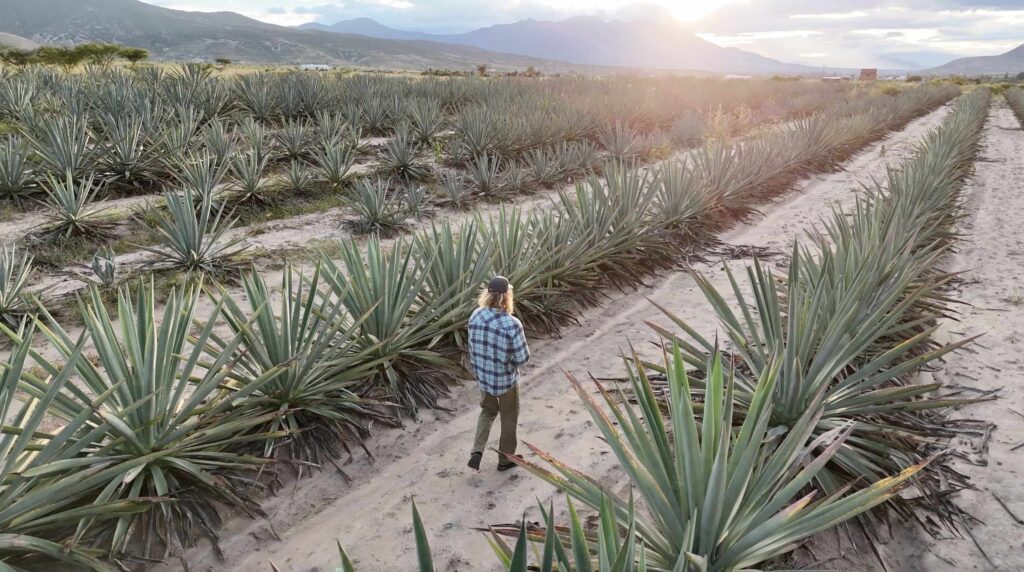
In October 2024, I arrived in Oaxaca to begin my initial month-long apprenticeship. I worked alongside the Jimador to harvest agave and with the Maestro Mezcalero to learn the processes of cooking, crushing, fermentation, and distillation. I lived within the community of Mitla during this immersive experience, a rare opportunity for a non-Zapotec, especially a gringo.
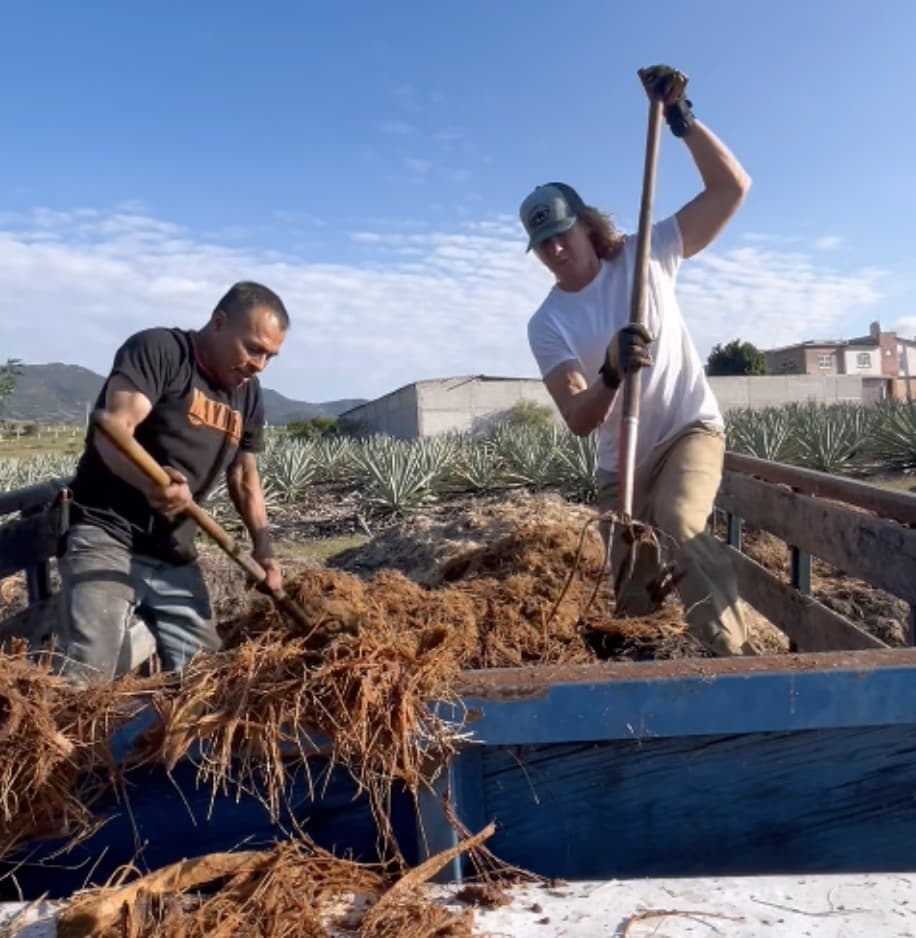
My time at the Palenque was humbling. The work was both educational and physically demanding. As an apprentice, I took on foundational tasks—cutting wood, moving horse manure, handling agave waste (bagasse), and cleaning the distillation areas. At the same time, I participated in every phase of the distillation process: harvesting, cooking, crushing, fermentation, and distillation. Being involved in each step gave me a deeper appreciation for the hard work, passion, and dedication behind every batch of O’Kahan Agave Mezcal.
What was the most surprising thing you learned during your time at the Palenque working the Mezcal distillation in Oaxaca, Mexico?”
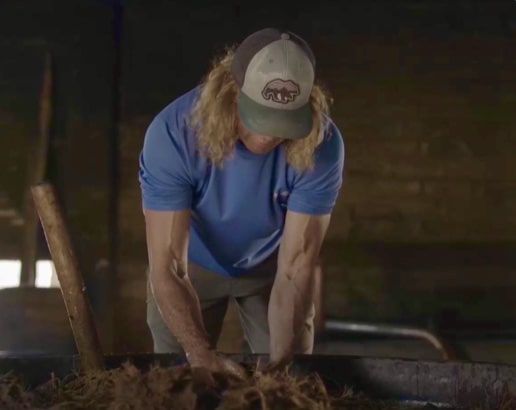
There are so many lessons I’ve learned and continue to learn that it’s hard to capture them all. It’s funny how you often see these polished videos and commercials showcasing people harvesting and distilling Tequila and Mezcal, with workers and visitors looking all suited up in their uniforms. Before heading down, I did a lot of research and was prepared for the reality of working in the fields and at Palenque. It’s an unforgiving, physically demanding environment. Most of my clothes, including my boots, didn’t make it home. After distillation, the used agave piñas, known as Bagasse, release juice that ruins your clothing. The agave plants themselves also tear up your clothes and your body. I ended up with about 15 puncture wounds from the Agave Penca (leaf).
Mezcal es… La Vida!!! (Mezcal is Life) – That’s O’Kahan Agave’s tagline, and it became my greatest lesson. In the community, everything revolves around mezcal. It’s used as currency, for bartering, and even as medicine to settle your stomach. It’s the drink of choice for special occasions like weddings, baptisms, and religious ceremonies. Mezcal is an integral part of Oaxaca’s culture and economy.
The true essence of Mezcal distillation can’t be learned from books; it has to be experienced over time. Trust and meaningful relationships are key—through cultural awareness, overcoming language barriers, shared experiences, and showing genuine care for the local community. That became the foundation of my apprenticeship. Mezcal es…La Vida!!!
How does the artesanal, all-natural process you learned differ from modern industrial production methods?
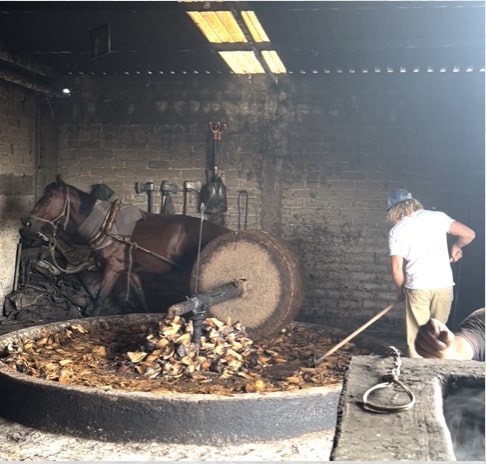
The French term “terroir” refers to the way soil, climate, and the winemaker combine to shape a wine. In a similar way, while soil and climate play a role in the growth and flavor of agave, it’s the microbial life at the Palenque that imparts mezcal’s distinct character. Native yeasts, bacteria, and other microbes thrive in the walls of the Palenque, Tahona, and fermentation tubs. Though a traditional Palenque might appear unsanitary, a sterile environment is actually unsuitable for mezcal production. These microorganisms are crucial for fermentation, converting the agave juice into alcohol.
There are no machines involved in the artesanal distillation process of mezcal, especially O’Kahan Agave. Everything is done by hand. When you see a tequila distillery and some Mezcal Palenques, they are using machines to cut down on the labor and speed up the system. They are focused on quantity over quality. O’Kahan Agave maintains the traditional artisanal standards of handmade and handcrafted…Quality of quantity. It is rare these days to see traditional standards; “standards are the standards—always.”
Are mezcal and tequila the same?
A lot of people say tequila is a mezcal, but mezcal is not a tequila. I completely disagree. Tequila is not a Mezcal. Completely different cooking style. Mezcal is made from 100% distilled agave, making it pure, all-natural, and additive-free. The only added elements to the fermentation are water, crushed agave, and natural airborne yeast. Unlike mezcal, tequila can be made of up to 49% additives such as corn, grain, artificial colors, and flavors.
Tequila and mezcal are both crafted from the hearts, or piñas, of the agave plant. The leaves are removed, and the piñas are then cooked and crushed.
The primary distinction lies in how the piñas are cooked: Mezcal piñas are roasted in wood-fired, rock-lined pits, which give the spirit its signature smoky flavor. In contrast, tequila piñas are traditionally steamed in above-ground brick ovens. Modern producers often use autoclaves, which are essentially pressure cookers, as a more efficient alternative. Some large producers, controversially, use diffusers, a method many agave experts compare to using a microwave. After cooking, the piñas are crushed to extract their juice, which then ferments—O’Kahan Agave Mezcal uses open tube fermentation…airborne yeast from the surrounding area, while tequila often uses commercial yeast.
When crafting your brand’s identity, what elements of mezcal’s cultural heritage were most important for you to preserve and share?”
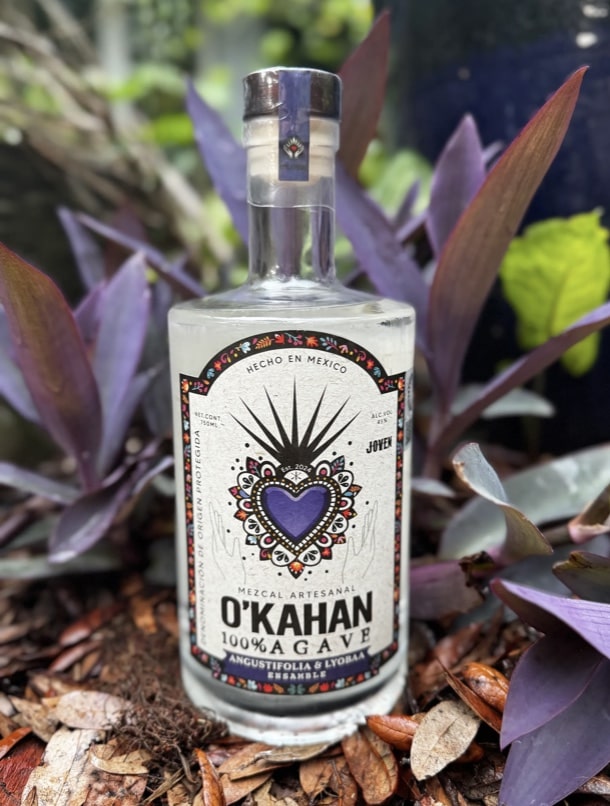
The heart of O’Kahan Agave’s brand identity is captured in its label—a fusion of Mexican and Irish heritage. It weaves together symbols from two distinct cultures, united by shared values of love, unity, faith, and a deep connection to the earth.
Agave Piña with Penca Crown (Mexico)
At the center is the piña—the heart of the agave—encircled by pencas (leaves) forming a crown. This symbolizes life, endurance, and a profound spiritual bond with the earth. In Mexican culture, especially among the Zapotec people, transforming agave into mezcal is seen as a sacred act, reflecting family, heritage, and nature’s nourishment.
The Claddagh Ring (Ireland)
Two hands holding a heart, topped with a crown. The hands signify friendship, the heart represents love, and the crown stands for loyalty. Passed down through generations, the Claddagh ring embodies tradition, heritage, and enduring bonds—mirroring the values at the heart of O’Kahan Agave.
The Border
The label’s border is inspired by Otomi embroidery (Tenangos), a vibrant indigenous Mexican art form that blends heritage, spiritual meaning, and artistry. The enclosed border also symbolizes the community surrounding agave plants, protecting and nurturing them through each stage of growth.
The Name
Keane is “O’Kahan” in Irish/Gaelic, derived from “Ó Catháin”—a name steeped in the legacy of warriors, honor, and resilience. This reflects our dedication to producing mezcal that celebrates authenticity and uncompromising quality.
The O’Kahan Agave label is more than design—it’s a visual story of cultural fusion, craftsmanship, and the virtues we pour into every bottle.
Crown – Loyalty, sacrifice, and resilience.
The O’Kahan Symbols
Heart – Passion, dedication, and the desire to create something deeply meaningful.
Hands – The labor and skill behind our mezcal, honoring the 100% artisanal process that requires time, patience, and mastery.
How do you balance creating an upscale product while staying true to mezcal’s traditional roots?
In Mexico, Mezcal has long been regarded as an upscale spirit—reserved for life’s most meaningful moments: weddings, funerals, birthdays, and religious celebrations. I’m not here to change what Mezcal is—especially not the Mezcal of O’Kahan Agave. Instead, O’Kahan Agave is introducing the world to what we believe is the finest-crafted Mezcal available today.
My Maestro Mezcalero—a sixth-generation master distiller whom I have the privilege of apprenticing under—embodies the art of fundamentals. His Angustifolia/Espadín and Potatorum/Tobalá are second to none, which is exactly why I chose to focus my apprenticeship entirely with him. Master the fundamentals, and excellence follows.
At O’Kahan Agave, quality is non-negotiable. We live by the belief that we are “the lion among the sheep”—choosing quality over quantity every single time. We honor and protect the purity of tradition, preserving the true artisanal methods that have defined Mezcal for generations.
Can you describe a memorable moment or interaction you had with the Maestro Mezcalero who taught you?
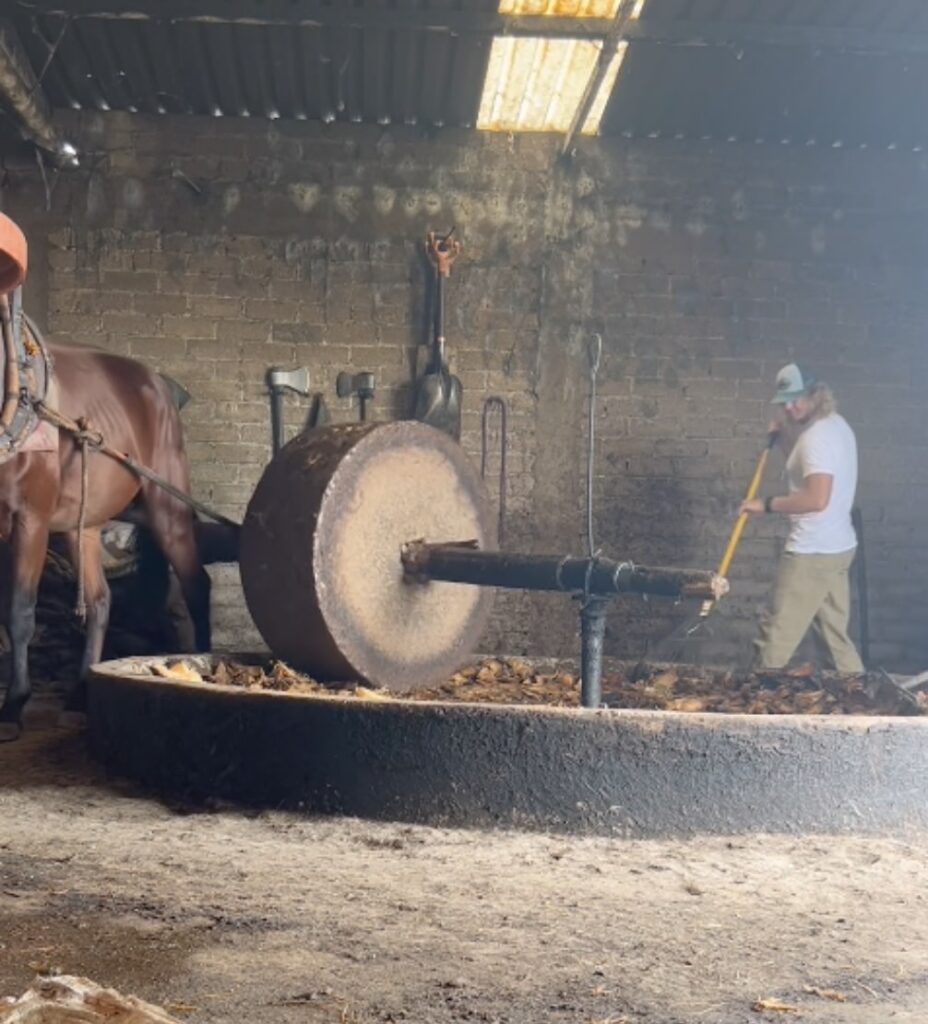
As mentioned earlier, the final piece for me to get involved with Mezcal was seeing the no-machines pure craftsmanship behind the process. In the current world we live in, we look for convenience and speed of product in hand, which often means skipping steps in the process and creating quantity over quality. There were times when I was in the agave fields or Palenque and thought to myself, “Is there any easier/faster way to do this?”, but that thought process is the death of quality and craftsmanship. For example, we cut the cooked agave with machetes into smaller chunks prior to crushing with the Tahona. Some Palenques use a wood chipper to ease up the physical labor and time consumption, but that takes away from generations of traditions that help create the essence of Mezcal.
In the military, when given a task, you receive the task, condition and standard and then move forward with completing that task so you can move onto the next task. So, during the first few days, I was completing tasks as fast as possible in order to get another task. About day 5, my Maestro stopped me and said, “tranquilo…slow it down. Move with the natural flow of Mezcal. Mezcal is done when Mezcal is done. The energy from the local wildlife and nature, including humans, affects the agave and the Mezcal. Your “rapido” energy takes away from that natural flow of energy. You are on Mezcal/Mexican time now…tranquilo. I hadn’t realized it until that moment…I was caught in that hurry up and get it done and not taking in the moments.
The energy of poor intent, big machines, tractors, forklifts, etc as often seen in Tequila factors affects the juice…bad energy.
“What message do you hope people take away when they experience your mezcal?”
“How did you manage to get this unknown brand out of Mexico and into bars, restaurants, and liquor stores?
In a way, we had the cart before the horse—we literally had nothing. So, I created an Information Operations (IO) campaign to generate early awareness and interest. The goal was to coordinate various capabilities—social media, word of mouth, and face-to-face engagement—to create awareness and ultimately build a following. I called it Odisea de Mezcal.
It was a rare opportunity for people to witness a brand being built from scratch, in real time. During our Facebook Live events and videos, we always closed with the line:
“We are crafting some of the finest mezcal in the world.”
Then my wife would chime in with perfect timing:
“That hasn’t been made yet.”
As part of the campaign, I visited bars and restaurants to personally connect with bartenders and bar managers. I shared the story of Odisea de Mezcal, which often led them to follow me on social media. I’d circle back regularly, updating them on the progress—always over a mezcal. These conversations helped set the stage for future tastings of what would eventually become O’Kahan Agave Mezcal.
The next challenge: getting the juice in the bottle and proving its worth.
Fast forward six months—I had just completed my first month as an Aprendiz de Mezcalero in Mitla, Oaxaca. I returned to the U.S. with 16 bottles of mezcal I helped distill from start to finish. Looking back, it’s funny: the bottles were all different shapes and sizes, with the first O’Kahan Agave label prototypes scotch-taped on by hand in Mexico. I packed them into two suitcases I’d picked up locally and headed to the airport.
My biggest concern wasn’t getting out of Mexico—it was U.S. Customs at Dallas Fort Worth (DFW). If the bottles were confiscated, it wouldn’t have ended the brand, but it would have thrown a serious wrench into my timeline—and I was already running on financial fumes. Fortunately, I made it through without issue. Maybe it was the surfer vibe and long golden locks… who knows?
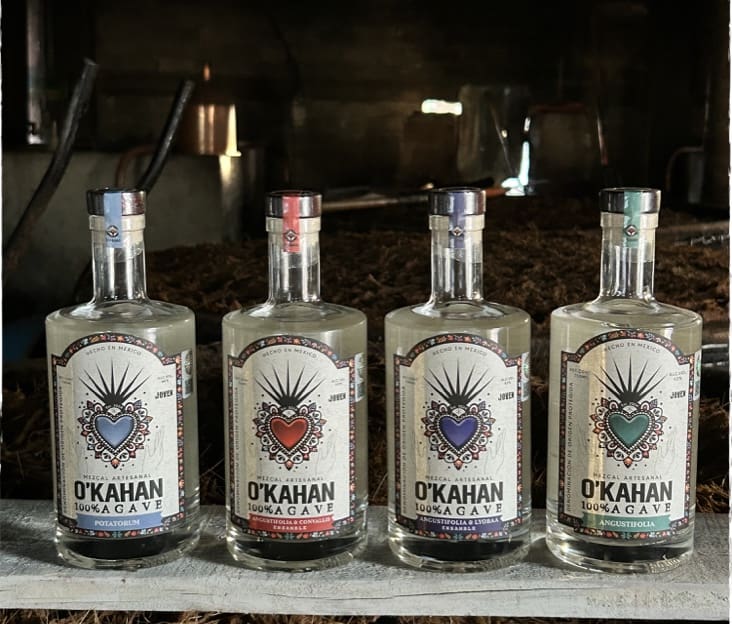
With two of the four O’Kahan Agave varietals now in the U.S.—Angustifolia (Espadín) and Potatorum (Tobalá)—I began small tastings to showcase the quality and craft behind the mezcal. The remaining two varietals would follow soon after.
So, you literally started this whole O’Kahan Agave Mezcal from scratch?
O’Kahan Agave Mezcal didn’t come from a formula or a well-worn playbook—it was built from scratch. What began as a personal journey fueled by passion and curiosity quickly transformed into a commitment to craft the finest mezcal possible.
From apprenticing under a sixth-generation Maestro Mezcalero to honoring generations of tradition, every step has been deliberate. We started with nothing but a vision and a dedication to quality, authenticity, and the artesanal spirit of mezcal-making.
Every detail of O’Kahan Agave Mezcal has been chosen with clear intent and deep purpose. From the selection of the cork—whether real or synthetic—to the hand-staining of each cork top, no element was left to chance. The bottle itself is a deliberate choice: the iconic round Jersey liquor bottle, evoking a sense of timeless tradition and authenticity.
Even the label tells a story. Incorporating 50% used agave (bagazo) into the paper not only honors sustainable practices but also creates a tangible connection to the heart of the mezcal—the agave plant itself. Every design element on the front and back labels has been thoughtfully crafted to reflect our values, heritage, and commitment to quality.
This meticulous attention to detail is more than aesthetics—it’s a reflection of the passion, respect, and care that go into every bottle of O’Kahan Agave.
O’Kahan Agave is the result of patience, skill, and respect for the craft—proving that true excellence is built one small batch at a time. This is mezcal made with heart, heritage, and unwavering pride.
To say I built O’Kahan Agave alone would be inaccurate. While the vision was mine, it became a reality because of the friends, family, and relationships I’ve built throughout my life and career. Their mentorship, guidance, financial support, and—most importantly—their belief in me have brought O’Kahan Agave to where it is today.
This brand was truly built by two communities: my mezcal family in Oaxaca and my circle of friends and family back home. Together, they have shaped not only the spirit in the bottle, but the spirit of O’Kahan Agave itself.
Where can people enjoy O’Kahan Agave Mezcal or buy a bottle or two?
The best way to find all the current locations where O’Kahan Agave is available—whether to enjoy by the glass or purchase—is by visiting okahanagave.com.
Here are just a few of our current proud partners:
Restaurants & Bars:
- ABBQ, Atlantic Beach
- Flying Iguana, Neptune Beach
- Atlantic Beach Country Club, Atlantic Beach
- Odd Birds, St. Augustine
- The Grape and Grain Exchange, San Marco
Liquor Stores:
- Golden Ox, Normandy Blvd
- Shores Fine Wine & Spirits (6 locations)
Coming Soon:
- Ponte Vedra Inn & Club and additional properties
- Dos Gatos
- TacoLu
- The Grande Cocktail Lounge
Stay tuned for more locations as we continue to grow and bring O’Kahan Agave to new communities.
FaceBook: https://www.facebook.com/okahanagave/
Instagram: @okahanagave

- About the Author
- Latest Posts

Glenn is the founder and publisher of First Coast Life. He is also a wonderful storyteller. Born on the 4th of July, he spends his spare time taking his camera and exploring everything beautiful this region offers with his rescue dog Callie by his side. He loves meeting new people and capturing the many beautiful moments and amazing local stories that showcase the true spirit of the area.




One Response
Fabulous Story! I will look forward to experiencing this incredible Mezcal!