
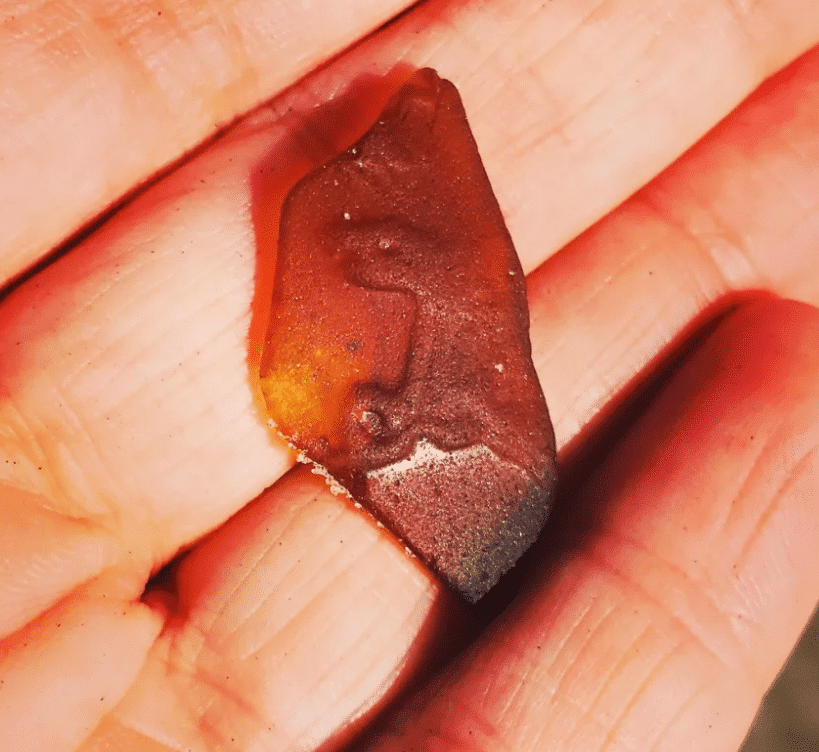
I’ve found many interesting things at the beach over the years, but it wasn’t until I moved to Atlantic Beach that I started finding sea glass.
I hear a lot of people have good luck with shark teeth here, and I have managed to find a few, but it’s nothing compared to my sea glass collection.
I grew up on the Gulf coast of Florida, and I never once found a piece of glass in all that white Siesta Key sand.
So, what makes Atlantic Beach so different? Why is so much glass concentrated in this area?
I did a little research to find the answer.
Where Does the Atlantic Beach Sea Glass Come From?
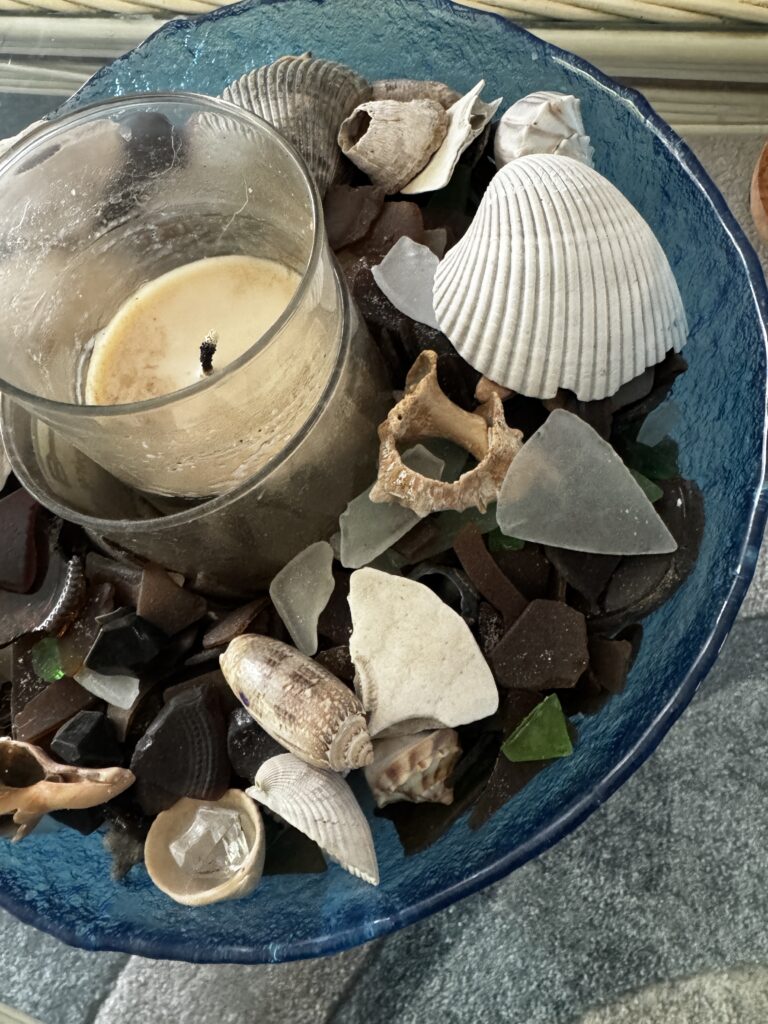
The sea glass found in Atlantic Beach, Florida (and nearby Jacksonville beaches) comes from a mix of sources, with the combination of ocean activity, tourism and the naval base contributing to its abundance.
These sources include:
1. Historic Maritime Activity
The waters off Florida’s coast have seen centuries of maritime activity—everything from Spanish galleons to merchant ships and fishing vessels.
Broken bottles, ceramics, and even shipwreck debris can tumble ashore over time, slowly transformed by the waves into smooth sea glass.
2. Local Coastal Communities
Littering and dumping—unfortunately, a part of many beach town histories—can play a role too.
Bottles and glass items tossed into the sea decades ago may now return as tumbled gems.
I suspect about 2/3 of my glass collection is from beer bottles, with brown being the most popular color.
3. Military and Naval Influence
Nearby Mayport is home to a major naval station. While modern regulations are strict, older waste-disposal practices could have contributed to the sea glass mix over the years, especially in the mid-20th century.
4. Tourism and Beachgoers
Atlantic Beach has long been a vacation destination. Tourists and locals alike may have (accidentally or not) left behind glass bottles and containers that eventually broke, tumbled, and transformed over decades.
I’m sure every holiday that attracts beachgoers in droves has contributed the creation of more sea glass.
5. Color Clues
The color of sea glass can tell a bit of its story. Common white (clear), green, and brown pieces often come from soda, beer, and wine bottles.
Rarer colors like cobalt blue (old medicine bottles), turquoise, or red often hint at older or more unusual origins.
How Long Does It Take to Make Sea Glass?

On average, it takes 20 to 40 years for a piece of glass to become true sea glass, though some pieces can tumble in the ocean for up to 100 years or more before they achieve that smooth, frosted look. The process depends on factors like wave action, sand content, and water chemistry.
The ocean acts like a giant rock tumbler—chipping, sanding, and frosting the edges until the glass is no longer sharp but instead softened and opaque. The most prized pieces usually have no shiny spots left, no sharp edges, and that distinct satin-like finish that only time and tide can create.
I have noticed that some of my sea glass collection looks a little more fresh, less hazy and sharper around the edges. So not all the sea glass in Atlantic Beach has such ancient origins. And sometimes I find just regular sharp glass, which I still collect so others don’t step on it.
Tips on Finding Sea Glass
Low tide is the best time to go looking for sea glass, and you’ll find it scattered all the way from the dry sandy beach to the shoreline.
Always check in the clusters of little shells, which is a great spot to find shark teeth as well. Glass is easier to spot, though, with the solid greens and browns that stand out against the speckled shell patterns.
The ocean is constantly churning up and depositing the glass, so if you walk along the edge of the water going one way, you’ll often find new pieces freshly dropped by the changing tide on your way back.
And after a storm, there is always a good amount of glass left behind!
What Do I Do with All This Glass?
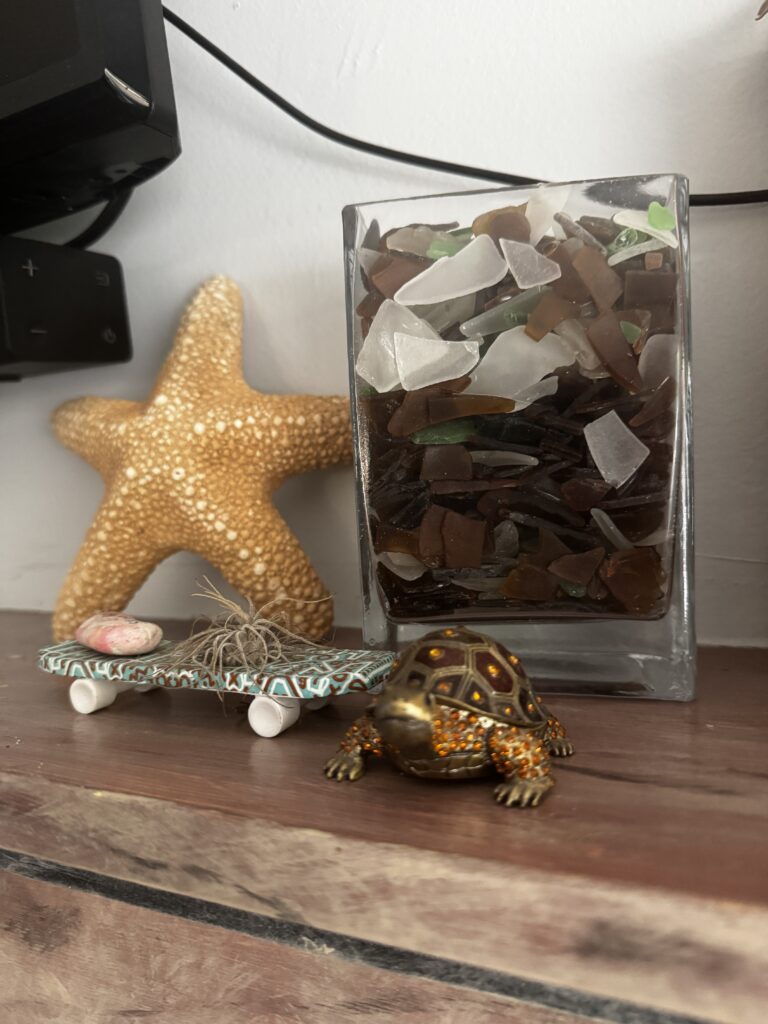
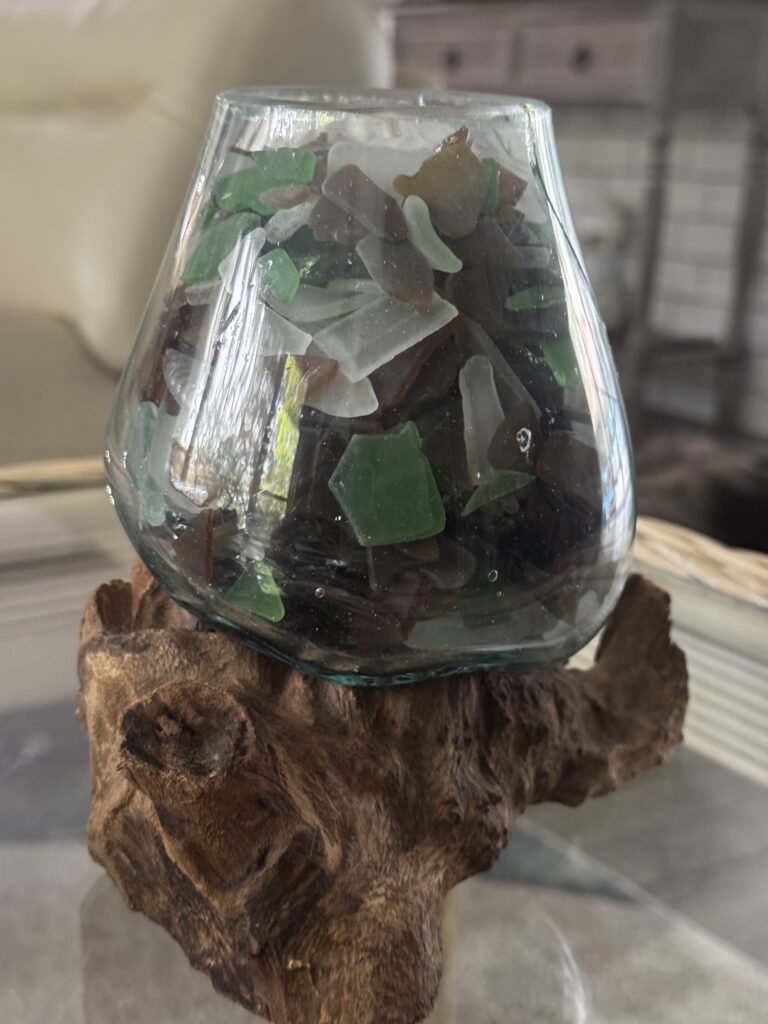
I get pretty vases and fill them with glass as I collect it. When one fills up, it’s time to get a new vase.
I’ve been here almost 10 years, and I rarely leave the beach without a piece of glass. I’ve filled up about five vases over the years, and the collection is always growing.

- About the Author
- Latest Posts

Candy is content creator, children’s book author, cosplay chameleon and crafty geek who often writes about her life and pop culture topics on her blog GeekMamas.com. Her love for writing began at an early age and stayed with her through college where she earned a journalism degree at the University of Florida. After owning a costume store for many years, she reconnected with her passion for writing and discovered a love for blogging and sharing stories with a personal angle.


2 Responses
Lovely article Candy! Sea glass is fun find for sure! I’ve found a few pieces over the years down here in St. Augustine. I’ve made a few crafty things with sea glass before but I love your idea with the vases, so pretty!
Thank you! They do look pretty in the vases. My son loves pouring them out and then putting them back in and layering the colors. So, they are also useful for entertainment, lol.